
Ultimate Mobile Detailing · Paint care
Clay bar treatment for paint that still feels rough
A wash can remove visible dirt while bonded particles remain on the finish. Add our Clay Bar Treatment to address that leftover texture and prepare suitable paint for its next care step.
$119 optional add-on
We come equipped with water, electricity and detailing tools. Wax is a separate optional extra.


Three paint conditions, three different decisions
Appearance and texture tell you different things. Bonded contamination may not be obvious in a photograph, so assessing the surface helps determine whether the clay extra adds value.
Clean-looking, gritty to touch
Bonded particles may remain after washing. Clay is worth considering when that texture comes from contamination on top of the finish.
Smooth surface, visible marks
A smooth panel can still have scratches, swirls or etching. Those defects call for a paint correction assessment; extra claying will not level them.
Smooth and maintained
If washing leaves the finish clean and smooth, there may be little reason to clay it that visit. Continue appropriate wash and protection care.
What the clay stage is for
Bonded contamination means particles that remain attached to the finish after a normal wash. Industrial fallout, rail dust, fine paint overspray and sap mist are examples that can contribute to an uneven feel.
Claying is a physical decontamination step. It works on suitable surfaces to remove that attached material; it does not fill chips, level scratches or repair damaged clear coat.
Chemical iron removal has a different role. Autoglym explains the distinction between iron removers and clay: an iron-specific product targets ferrous particles, while detailing clay can address a wider range of bonded contamination.
Close-up care, panel by panel
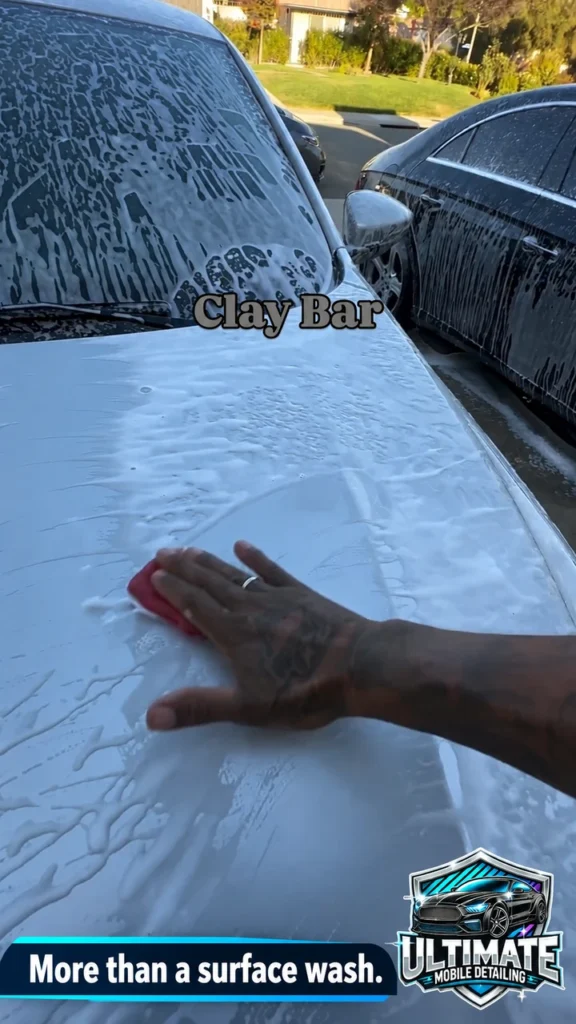
Our photographs show work in progress on a wet, light-colored hood, including a closer view of the handwork and treatment near the panel edge.
- Clean, then assess Loose grit needs to be removed before remaining texture is assessed. The condition of the finish determines whether clay is useful.
- Control contact with the finish Suitable lubrication, light pressure and a clean working face help manage the treatment. Working in small areas allows attention to the individual panel.
- Check before the next stage The treated surface is checked for remaining contamination. Polishing needs and the choice of protection are separate finishing decisions.
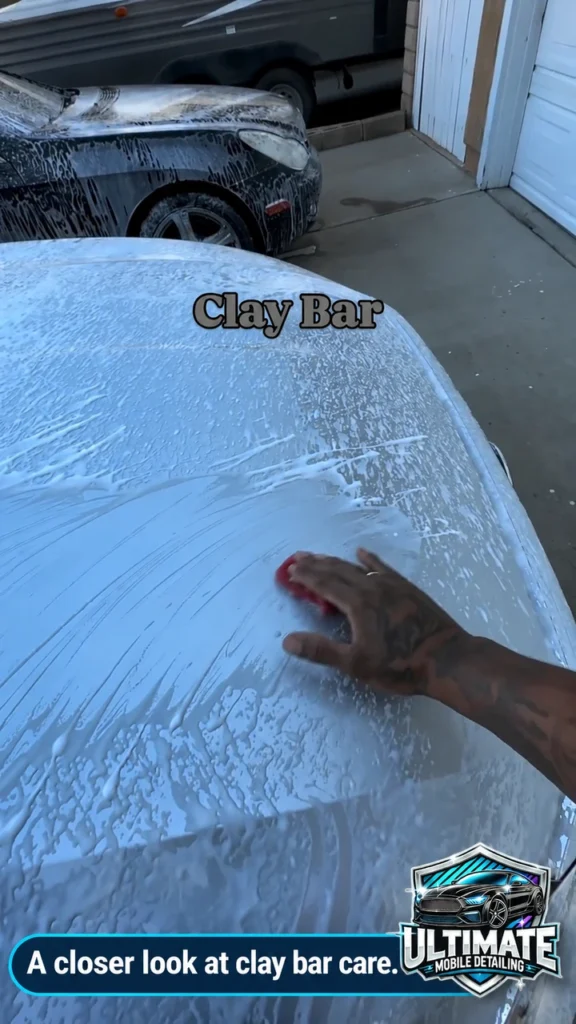
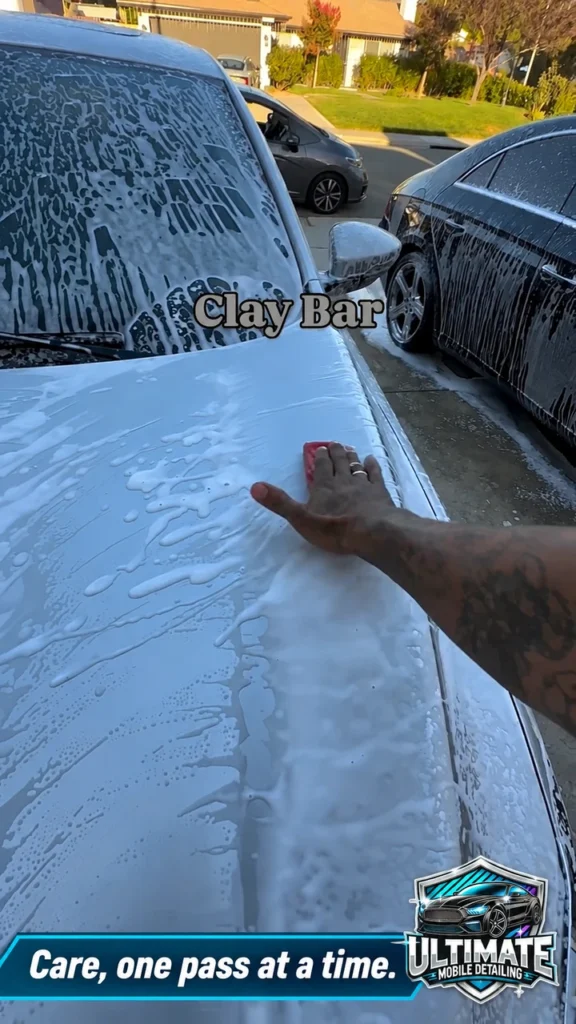
Clay grade, lubrication and paint condition all matter. Excess pressure or contaminated clay can cause fine marring, so a smoother feel should never be pursued by repeatedly scrubbing one stubborn mark.
Choose your finishing step
Clay prepares the surface; protection is another step. Decontamination does not leave a lasting protective coating and can reduce existing wax or other surface protection.
Our Car Waxing add-on is available separately for $39. Add it when you want suitable paint protected after preparation; polishing and paint correction are not included in the $119 clay extra.
Questions that help you choose
Is clay bar detailing worth it on a newer car?
It can be useful when bonded contamination remains after washing, even on a newer vehicle. Age alone is not a reason to add clay if the surface does not need it.
Will clay remove scratches or water spots?
Clay does not correct scratches or swirls. Some deposits sitting above the paint may come away, but etched marks have affected the finish and need a different assessment.
What about hardened sap or heavy overspray?
A light mist of contamination differs from thick, hardened deposits. Those deposits need an appropriate removal process; using more pressure with clay is not the solution.
How often should a car be clayed?
Base the decision on contamination after washing and the finish's care requirements. Outdoor exposure and driving conditions vary, so clay does not need to accompany every wash.
What if the paint already has a ceramic coating?
An existing coating changes the maintenance plan. Follow its manufacturer's care guidance and choose decontamination around the contamination and finish, rather than treating claying as an automatic step.
Add paint decontamination to your visit
Clay Bar Treatment costs $119 as an optional extra. Your detailing package and any additional finishing services are priced separately.
Choose Exterior Car Detailing for wider bodywork care, or select Full Car Detailing when the cabin needs attention too.
Ultimate Mobile Detailing makes it convenient to combine the care your vehicle needs in one visit. Select your package and Clay Bar Treatment through our booking page.
Book Now